KNS Institute Of Technology

Information Science & Engineering

About The Department

Department of Information Science & Engineering started its 4 year B.E Course in the year  2001with an intake of 60 students. The Department has well equipped laboratories with state of art computational facility.The Department has highly qualified and dedicated faculty members with rich experience in teaching and research. Our goal is not only to teach the students,how to use theoretical aspects to build application in future to meet industry standards. The department has been organizing conferences,workshops,seminars and students key activities to encourage
the students and faculties to commit lifelong learning process.Students are also encouraged to participate in state and national level competition covering academics, cultural activities and also trained to become entrepreneur. Department is committed for creating the students that reflects the diversity of world we live in, contributing to educational excellence and dynamic campus environment.

Vision

Aim to become a leader in the field of education, training, and research in the Information science & Engineering discipline.

Mission

  • To inculcate the leadership capabilities, ethical values & professional behavior to face the challenges in global market.
  • To provide quality education in information science engineering by creating nurturing innovative and technologically
    steadfast learning environment.
  • Supporting and inducing life long learning.
  • Establish association and collaboration with organization of reputed for knowledge sharing and enhancing skills to unlease
    students creativity and innovation.

HOD Message

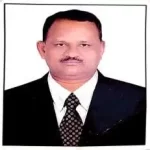
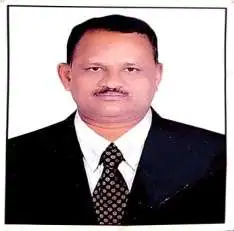
Dr. Suresh H 

B.E, M.TECH, Ph.D.

Professor & Head

Department of Information Science & Engineering

Behalf of KNSIT family it is my pleasure to welcome you to the department of Computer Science & Engineering-(Data Science).
Department of Computer Science & Engineering and Data Science domain has broad range of applications. For the aspirants of Data Science Engineers I would like to assure that KNSIT, Department of CSE-(DS) will provide abundant opportunities to explore your skills and knowledge to integrate the theory and hands-on applications as a part of teaching and learning process.
I also like to assure that, as a part of collaborative learning KNSIT, CSE-(DS) provide good Industrial exposure which can equips the students with the technical and soft skills essential for a successful career in field of Data Science Engineering.

The Program Educational Objectives define future roles for which we are preparing our students by studying four years of undergraduate engineering program. The major objectives for the Department of Information Science at K.N.S Institute of Technology are:

PEO-1:

Engage in professional practice to promote the development of innovative systems and optimized solutions for information science and engineering.

PEO-2:

Excel as IT professional with proficiency in designing solutions to information engineering problems.

PEO-3:

An ability to implement technology effectively on defined engineering needs with engineering community and with society at large.

PEO-4:

Exhibit high standards of social and professional ethics, entrepreneurship and leadership qualities.

PSO1: Apply appropriate information technology and adopt the appropriate methodology to make an organization or an individual to achieve its objectives and goals.

PSO2: Manage IT services for the organization and individual with its goals.

PSO3: Implement IT services that would perform tasks related to latest trends of information technology.

PSO 4: Explain the syntax, flow of the program and sub problems to obtain the programmatic solutions.

PSO 5: Inseminate Skills for successful carrier path for higher studies.

Engineering Knowledge: Apply the knowledge of mathematics, science, engineering fundamentals, and an engineering specialization to the solution of complex engineering problems.

Problem Analysis: Identify, formulate, review research literature, and analyze complex engineering problems reaching substantiated conclusions using first principles of mathematics, natural sciences, and engineering sciences.

Design/Development of Solutions: Design solutions for complex engineering problems and design system components or processes that meet the specified needs with appropriate consideration for the public health and safety, and the cultural, societal, and environmental considerations.

Conduct Investigations of Complex Problems: Use research-based knowledge and research methods including design of experiments, analysis and interpretation of data, and synthesis of the information to provide valid conclusions.

Modern Tool Usage: Create, select, and apply appropriate techniques, resources, and modern engineering and IT tools including prediction and modeling to complex engineering activities with an understanding of the limitations.

The Engineer and Society: Apply reasoning informed by the contextual knowledge to assess societal, health, safety, legal and cultural issues and the consequent responsibilities relevant to the professional engineering practice.

Environment and Sustainability: Understand the impact of the professional engineering solutions in societal and environmental contexts, and demonstrate the knowledge of, and need for sustainable development.

Ethics: Apply ethical principles and commit to professional ethics and responsibilities and norms of the engineering practice.

Individual and Team Work: Function effectively as an individual, and as a member or leader in diverse teams, and in multidisciplinary settings.

Communication: Communicate effectively on complex engineering activities with the engineering community and with society at large, such as, being able to comprehend and write effective reports and design documentation, make effective presentations, and give and receive clear instructions.

Project Management and Finance: Demonstrate knowledge and understanding of the engineering and management principles and apply these to one’s own work, as a member and leader in a team, to manage projects and in multidisciplinary environments.

Life-long Learning: Recognize the need for, and have the preparation and ability to engage in independent and life-long learning in the broadest context of technological change.

Faculty Details

Sl. No. Name Qualification Experience Specialization Photo
1
Dr.Suresh H
B.E, M.TECH .Ph.D
27 years
Network Security

2
Mr. Syed Zabiulla
B.E, M.Tech (Ph.D)
14 years
Machine Learning

3
Ms.Rashmi Purad
B.E(ISE), M. Tech
6 years
Computer science and engineering

4
Ms.Devi Vijay
B.E(ECE), M. Tech
4.9 years
Computer and information science

5
Mrs. Mounika K R
MCA
1 year
Computer SCIENCE

6
Ms. Sowgandhika
BE, M.Tech
3 years
Information Science

Department Laboratories

Computer Programming Laboratory

Data Structures & OOPs Laboratory

Electronic Circuits & Logic Design Laboratory

Microcontroller and Microprocessor Laboratory

Design and Analysis of Algorithm Laboratory

Computer Networks Laboratory

Database Management System Laboratory

Software Testing Laboratory

File Structures Laboratory

Machine Learning Laboratory

Web Technology and Application Laboratory

Mobile Application and Development Laboratory

Object Oriented Programming with JAVA Laboratory

Python Programming Laboratory

Artificial Intelligence and Machine Learning Laboratory

Salient Features / Best Practices

  • We have transformed our teaching techniques from black board to hands-on experience and ICT learning. The department is equipped with WiFi enabled laboratories with modern Infrastructures.

  • The department emphasizes practical and project based learning for students. Students are working on real time projects in various domains.

  • Effective use of ICT, faculty are engaged in online classes, sharing study materials etc.

  • The department promotes students to undertake the intern projects to gain insights of technical domains such as Machine Learning, Natural Language Processing, Wireless Networks, Network Security, Image Processing etc.

  • Industrial experts have been invited to conduct Hands-On Workshops, Seminars, Skill Development Programs.

  • Students take up various competitive examinations. Nearly 50% of students have enrolled in GATE examination and have opted for higher studies in different Foreign Universities and IIT’s

  • Department conducts Parents Teachers Meeting and has a Student Mentoring System.

  • Additional tutorials classes are conducted for slow learners.

  • Expanding learning opportunities through online classes and providing course materials , laboratory programs and videos.

  • The department fosters student’s participation in National/ International Conferences, Technical Fest, Cultural events, Sports meets and extra-curricular activities.

  • Students actively participate in University Level Sports Meet, Inter College Fest, Hackathon, National Technical Fest, Awareness Camps etc. while focusing on academics.

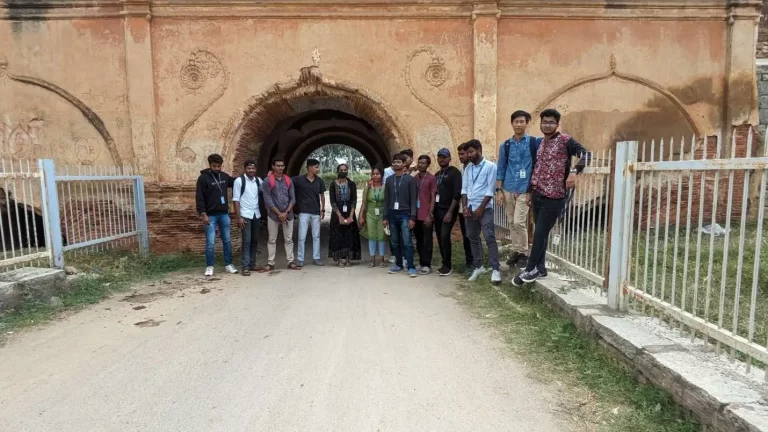
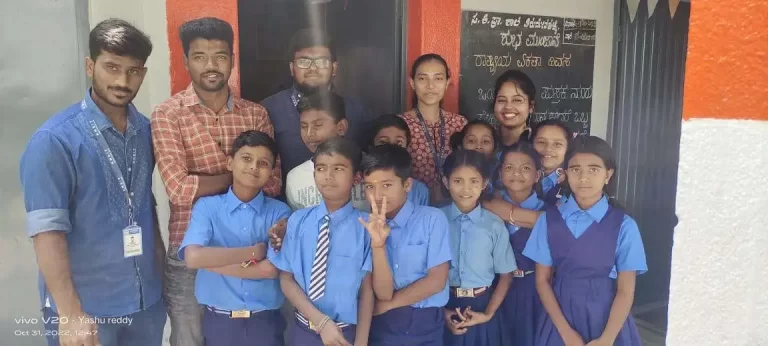
List Of Activities

List of MOU’s Details

Sl. No. Company Details
1
ATS InfoTech Pvt Ltd Rajajinagar,Bangalore.
2
Codeset Institute of Training Vijaynagar,Bangalore.
3
EdGate Technolgies pvt Ltd R T Nagar,Bangalore
4
Simplilearn solutions pvt Ltd HSR layout Bangalore.
Scroll to Top